
The public respect farming
21st May 2026 by Joss Naylor
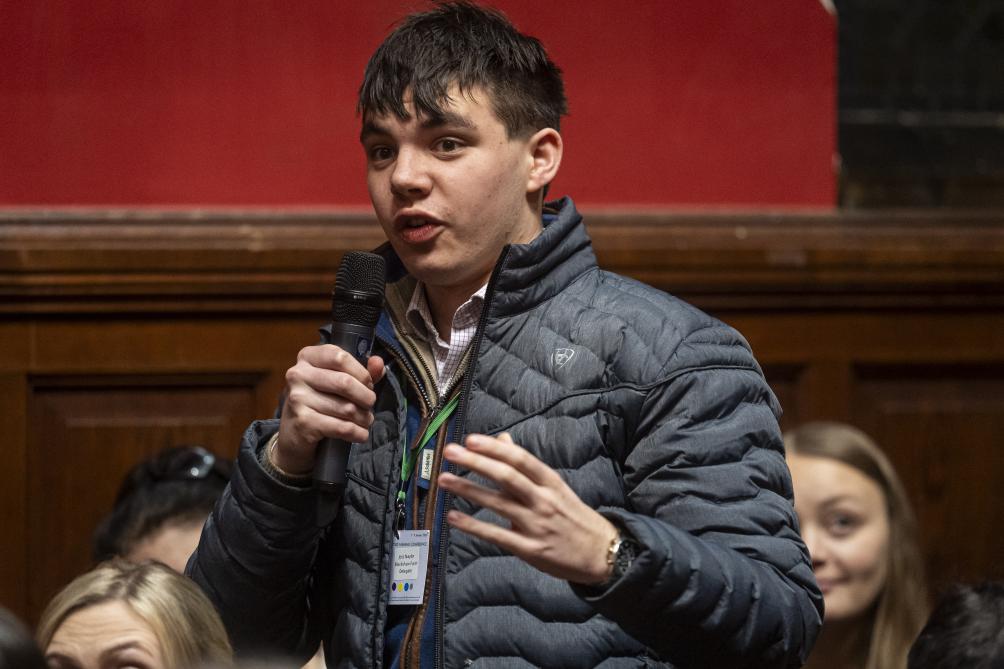
OFC Bursary recipient Joss Naylor shares his reflections from OFC, and why he feels the public do respect farming.
If I were to sum up this year’s Oxford Farming Conference in three words, it would be “inclusive”, “honest” and “professional”.
First, the Oxford Farming Conference has supported me by including my voice as a young person and empowering me as an individual. While I am the talkative type, the lived-in discussions around farming have taken place in my family around the kitchen table, often shrouded within the political disillusionment arising from last year’s events, the jargon-filled debates and echo chambers of the internet, or simply how unpredictable the weather is.
For me, the Oxford Farming Conference stands in stark contrast to this; debates were clear, but not simplistic, and the opportunity to attend provided me with the chance to present my perspective in a professional sphere which remained open and unabashedly honest. This was particularly cultivated by the variety of speakers between practical, academic and political spheres, which complemented each other and aided my feeling that anyone passionate about farming could lend their voice to discussions.
I would also like to mention the power of the conference theme in constructing my perception of the conference. This year’s theme was “resilience”, which personally resonated in creating an inclusive atmosphere for me. I have grown up with Cerebral Palsy and experienced the need to work to find my place in supporting my family and the industry, even if not in the most physical capacity. At the same time, my family have also needed resilience to cope with this challenge too – something completely unknown to them beforehand. This and other challenges were represented at the Conference, particularly through the Farming Community Network’s “Nip It In The Bud” campaign and the conference’s speeches about the strength of the family farm, which universalised the struggle of an unforeseen event and made our perspective feel recognised.
My experience at Oxford also enhanced my agricultural education beyond my practical experiences of livestock farming. Specifically, OFC26 enabled me to explore the shared and individual factors which vary productivity between individual farms, farm networks, scaled conglomerate producers and product-differentiated farms. In this way, I developed an understanding of productivity, price and technological variation, as well as gaining knowledge of each farm’s included position within the national food production picture.
Attending the Conference also encouraged me to consider different ideas about the atmosphere around farming, specifically through its discussion of how the narratives of farming are perpetuated and received by different stakeholders. This was particularly evident through talks by Professor Jack Bobo and Dominic Watters, who approached the issue of food insecurity from an academic perspective and a lived-in urban reality respectively. Both approximated different yet co-existing missions for farming and its messages, showcasing how farming is an open forum for innovation. For me, these speeches highlighted how every experience in farming is unique and valid in meeting farming’s wider socioeconomic goals and effectively engaging those beyond the field.
Given these speeches, I would argue that more than anything else, the Conference built my understanding of why the public respect farming and why politics seeks to engage with it. Like my positive feeling from the Conference, this reverence arises from farming’s authenticity and heritage. OFC26 itself reflected these; despite the Conference being in its ninetieth year, it remained committed to its initial missions: inspiring independent thought and providing a networking environment for innovation.
In this respect, the Oxford Farming Conference was the first place where I connected with agricultural voices from across the UK and internationally. More than any other event in farming, the Conference’s opportunities to network displayed that while farmers and policymakers are individually inspiring, farming’s stories form an all-encompassing picture of farming’s purposes, needs and collective identity.
Finally, I would like to give credit to OFC in giving me the support I needed to attend through the bursary scheme. This was not just a token gesture but a true display of inclusion for a conference that ultimately showed the meaning of resilience; while tried by challenges – not least recent political decisions – the conference and farming in general is true to all parts of the lived experience, and with an undeniable footprint on the lives of those both within and without.
Joss Naylor